

Healing Pines Recovery - pine icon

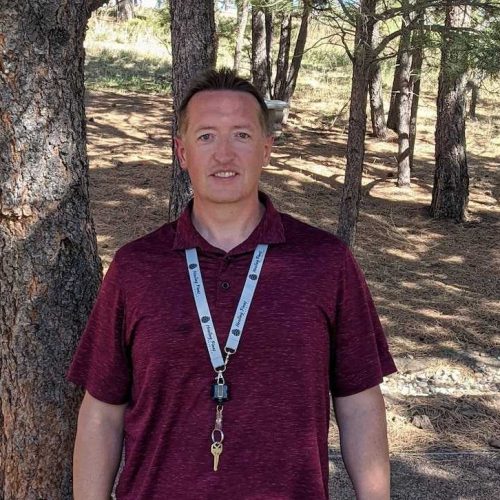
Michael Anderson, MA, LPC

Michael Anderson Pic

Clinical Director

Michael is a Licensed Professional Counselor and has felt lead to be in this role since the age of 15. He is passionate about coaching and helping others becoming their very best. Michael grew up in Northern California and has lived in Colorado for close to a decade. He completed his undergraduate degree in Psychology at Liberty University and received his Maters in Counseling from Colorado Christian University. Michael has a heart for helping the addiction population and their families to find freedom and lasting recovery to positively affect people’s legacies. Michael has experience in individual, group, marriage, and family Counseling.

Michael uses CBT/DBT/Person Centered/Solution Focused and Emotionally Focused Therapies. He enjoys staying active and supporting Colorado Sports Teams (especially the Broncos), movies, Church, playing drums and spending time with his wife and children. Michael brings a non-judgmental and relaxed approach to Healing Pines clients and staff.
Forest bathing, or Shinrin-yoku, is the Japanese practice of slow, sensory immersion in a wooded environment. You move at a crawl, leave the phone in your pocket, and pay attention to what your eyes, ears, nose, and skin are picking up from the forest around you. No summit, no distance, no agenda beyond noticing. Here at

Read More

Whether an employer must offer drug rehabilitation before terminating an employee depends on three factors: whether a substance use disorder qualifies as a disability under the ADA, whether the employee meets FMLA eligibility thresholds, and whether any state law, union contract, or industry rule imposes additional obligations. No single federal rule mandates rehabilitation as a

Read More

Civil commitment for substance use depends on state statute, documented danger to self or others, and a court's clear-and-convincing finding that involuntary treatment is warranted. This page explains when forced rehab is legally possible, how the process works state by state, what Colorado families can expect, and which voluntary pathways tend to produce better long-term

Read More

Non-12-step rehab uses secular, evidence-based therapies and individualized planning rather than a spiritual framework or fixed step sequence. This guide covers what these programs include, how they compare to 12-step models, what settings and lengths to expect, and how to evaluate a program before you commit. Key Takeaways Skills over surrender: Non-12-step rehab centers personal agency and

Read More

The opioid crisis encompasses both prescription medications like oxycodone, hydrocodone, and fentanyl, and illicit drugs like heroin. While all opioids work on the same brain receptors and create dependence through similar mechanisms, important differences exist between prescription opioid withdrawal and heroin withdrawal—differences that affect timeline, symptom severity, medical complications, and treatment approaches. Understanding these distinctions helps

Read More

The question "how long does alcohol withdrawal last?" weighs heavily on anyone considering quitting drinking after months or years of heavy use. The honest answer involves both good news and complexity: acute physical withdrawal typically lasts 5-7 days, with the most dangerous symptoms peaking within 48-72 hours—but the complete timeline varies significantly based on individual

Read More